














Choose the best survival knife for outdoor preparedness by comparing blade and handle materials, size, carry sheath, weight, maintenance and local rules.
What is the best survival knife?
The best survival knife is an outdoor tool whose size, materials, carry system and maintenance needs match your environment and experience. For preparedness, prioritize clear specifications, a secure way to carry the knife and a design you can handle responsibly. A larger blade is not automatically better; weight, storage and practical cutting needs all affect whether a knife is useful in the field.
How to compare outdoor fixed blades
Begin with the blade material and thickness because they affect care and intended use. Check the overall and blade lengths to understand portability. Handle material matters for grip and upkeep, while a supplied sheath can make carrying and storage more organized. Weight is another practical factor when equipment must be carried over distance.
Avoid treating “best rated survival knife” or a dated list such as “best survival knife 2017” as a universal answer. Reviews can show how people feel about a model, but current specifications and responsible use matter more. Confirm applicable laws before carrying or transporting any knife.
A specified M10 example
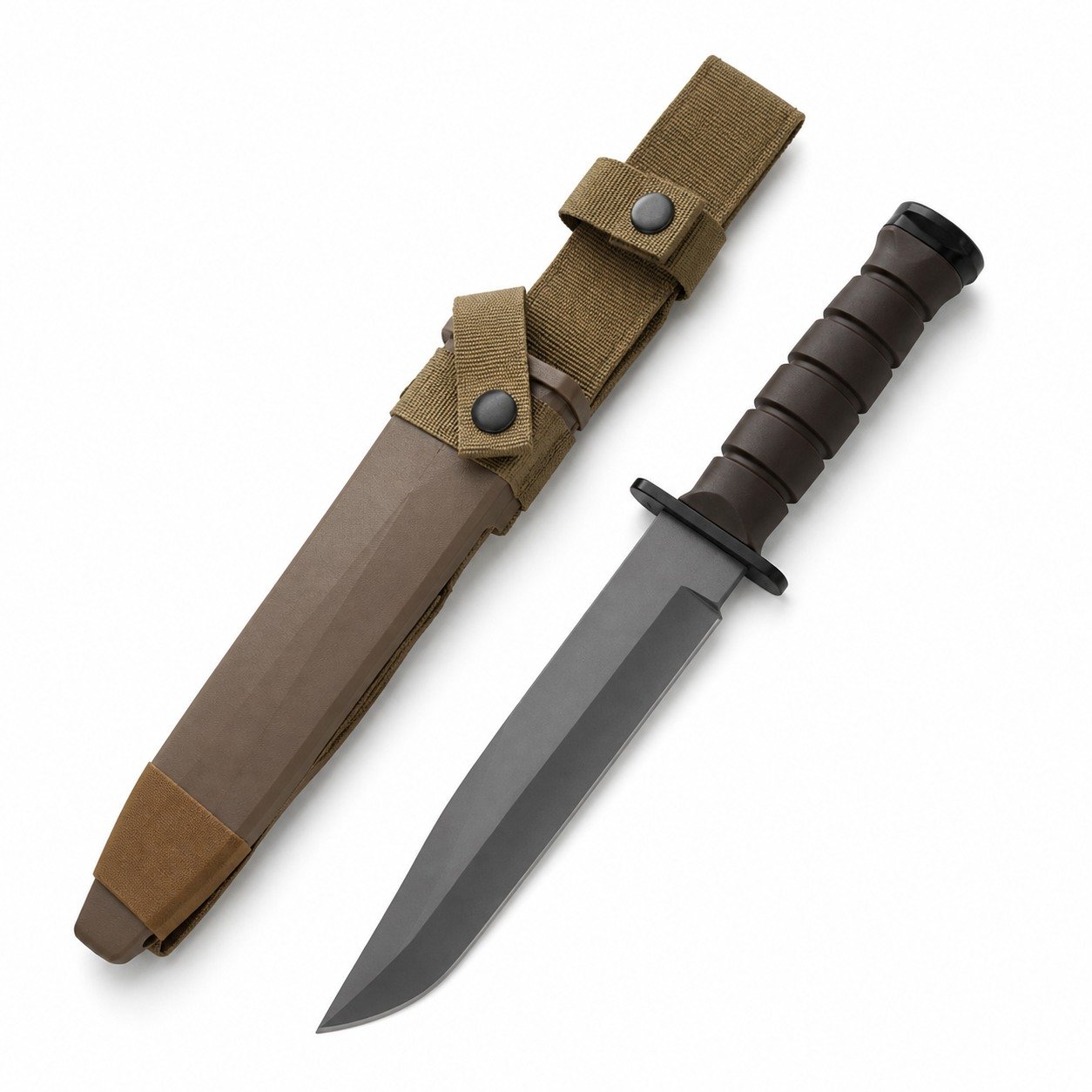
The M10 Integrated Keel Fixed Blade Knife is listed with a 20 cm blade, 5 mm blade thickness, 1095 high carbon steel, a nylon handle, a K-sheath and an approximate net weight of 400 g. Its total length is listed as 32.8 cm. These facts make it a substantial fixed-blade outdoor tool, but they do not prove that it is suitable for every survival situation.
Practical next step
List the outdoor tasks, climate and carry distance you expect, then compare those needs with the knife’s listed dimensions, materials, sheath and maintenance guidance before making a decision.
Is a fixed blade always the best survival knife?
Not always. A fixed blade may suit users who value a substantial outdoor tool, while others may need a smaller or lighter option. Compare intended tasks, carry method, maintenance and local requirements rather than choosing by category alone.
How should high-carbon steel be cared for?
Follow the product’s care guidance, keep the blade clean and dry when appropriate, and inspect it after damp or dirty use. The exact maintenance routine depends on the steel, finish and environment, so avoid assuming one method fits every knife.