














Understand D2 steel composition in practical terms, including what the grade confirms, what it cannot prove and how to care for a D2 blade.
D2 steel composition: the direct answer
D2 steel composition is generally associated with a high-chromium tool steel containing carbon, chromium and other alloying elements. Exact percentages can vary by specification and supplier, so a product label should not be treated as a complete chemical certificate. For knife buyers, the useful first step is to confirm that D2 is the stated blade material, then review any additional maker information.
What a D2 label can and cannot tell you
The D2 name identifies a material grade, but it does not independently prove exact hardness, edge retention, toughness or corrosion behaviour in a finished knife. Those results depend on processing, heat treatment, blade geometry and use. Avoid promising specific performance when the listing does not provide supporting details.
D2 is often discussed as more corrosion resistant than many ordinary high-carbon steels, but it should still receive sensible care. Wipe away moisture and residue after use, keep the blade dry and store the knife appropriately. Follow the product’s own instructions when available.
The listed product facts
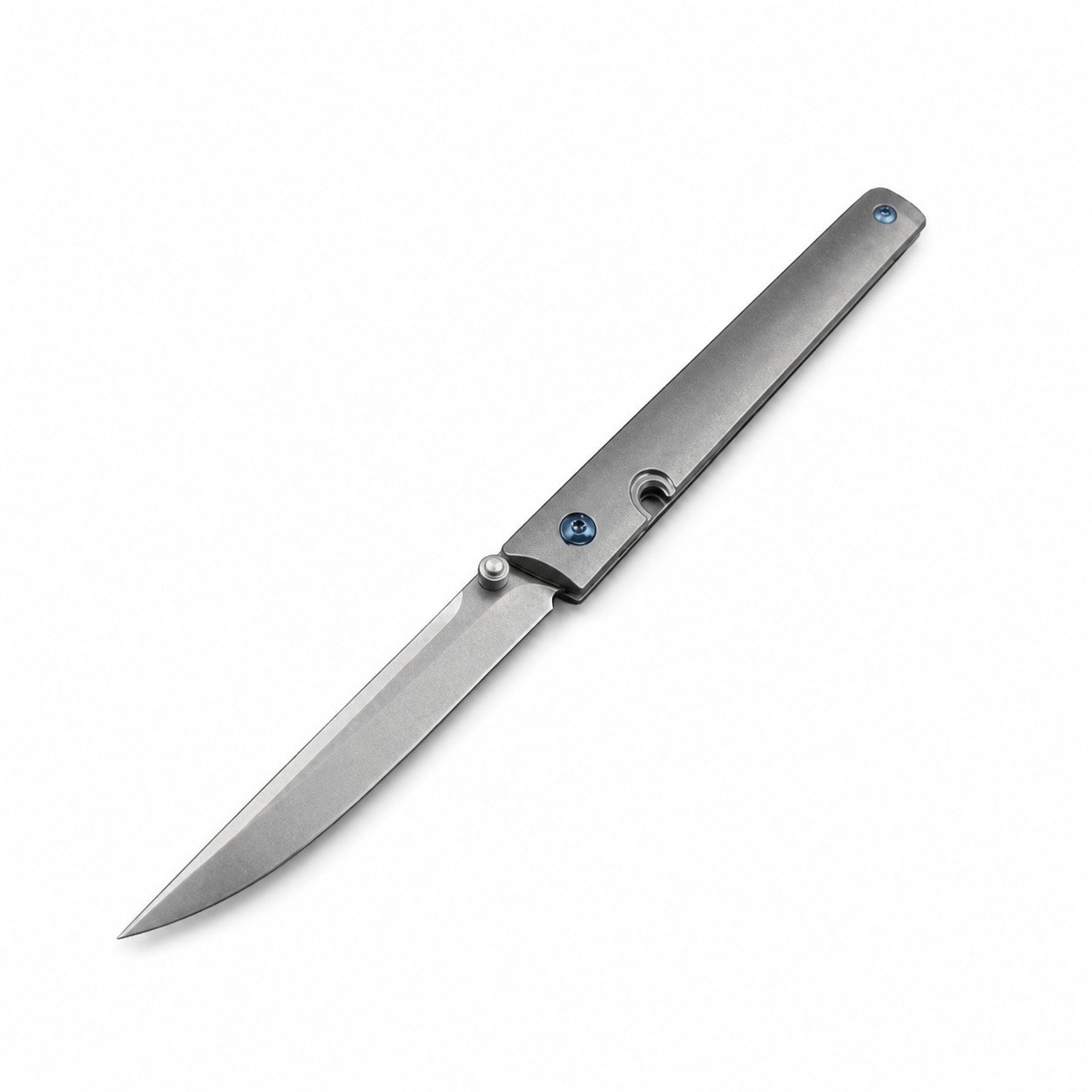
The 7096 Titanium Handle Fold Folding Knife explicitly lists D2 as its blade material. It also lists a titanium alloy handle, an 8.0 cm blade, a 19.2 cm total length and a net weight of 60 g. These are the confirmed product details supplied for comparison.
The listing does not provide a detailed chemical breakdown or heat-treatment data. Therefore, it supports the statement that the blade material is D2, but not a precise claim about the complete D2 steel composition or finished performance.
A sensible buying check
If exact chemistry matters, ask for the relevant material standard or manufacturer documentation. Otherwise, compare the confirmed grade with the knife’s dimensions, care needs and intended everyday use. Your next step is to save the written specification before purchase so you can distinguish verified facts from general steel descriptions.
Is D2 steel composition identical in every knife listing?
Not necessarily. Exact composition depends on the applicable specification and supplier. A listing that says D2 confirms the stated grade, but a complete chemical breakdown requires appropriate manufacturer or material documentation.
What does the listed product confirm about its blade?
It confirms D2 as the stated blade material. The available facts do not provide exact element percentages, heat-treatment details or guaranteed performance characteristics.