














Find the best steel for a hunting knife by balancing edge retention, toughness, corrosion care, sharpening effort, and the work you expect it to do.
Best steel for hunting knife use
There is no single best steel for every hunting knife. The right choice balances edge retention, toughness, corrosion resistance, and ease of sharpening. For demanding outdoor use, identify the work first, then choose a steel whose maintenance requirements match your conditions. A steel that holds an edge well may still need more careful care than a simpler, tougher option.
What to compare
Edge retention matters when a knife must stay usable through repeated cutting. Toughness matters when the blade may encounter twisting or impact, while corrosion resistance is valuable in damp environments. Sharpening convenience also matters because even a durable edge eventually needs maintenance. Heat treatment and blade geometry can affect performance, so steel name alone is not a complete buying decision.
A supplied 1095 example
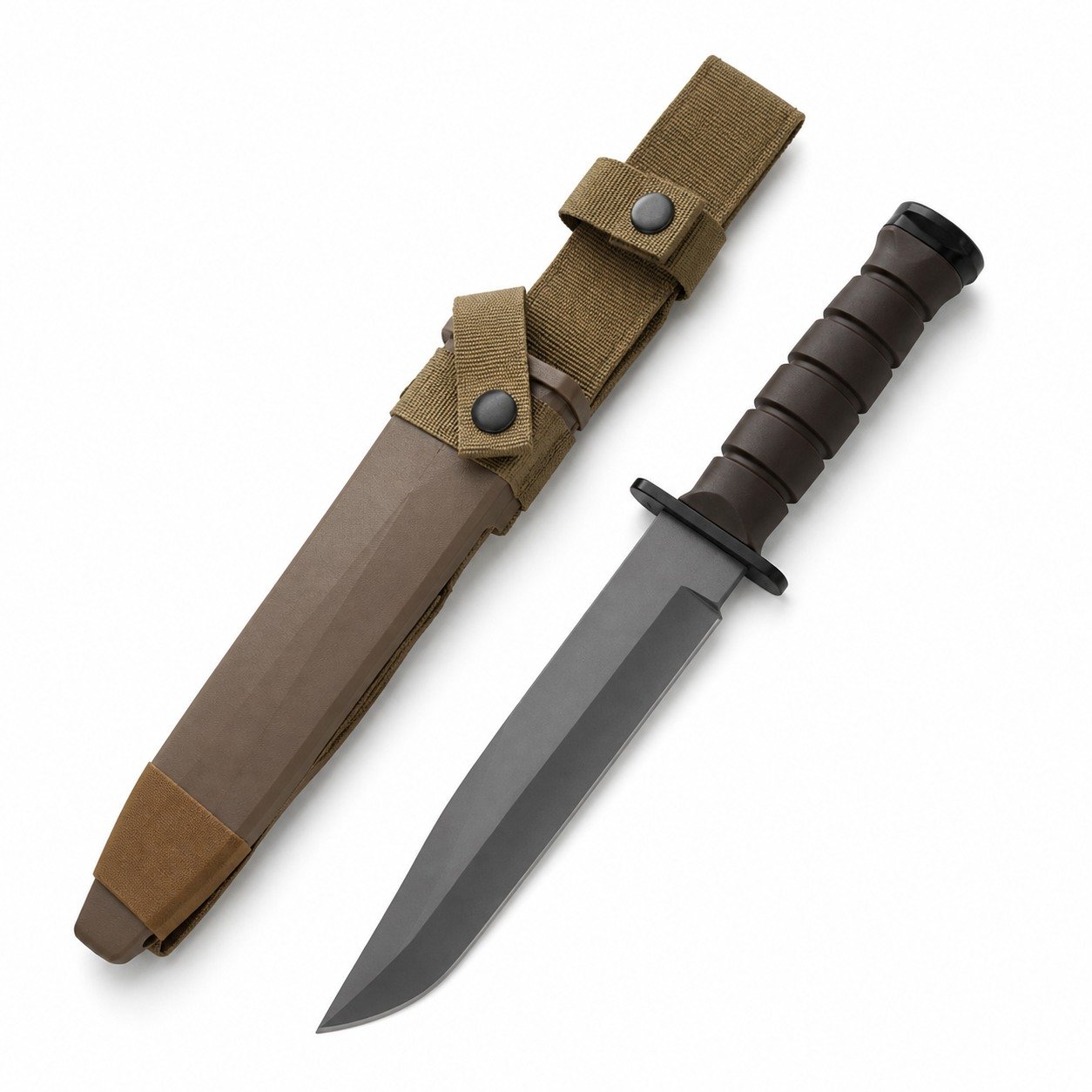
The M10 Integrated Keel Fixed Blade Knife is listed with a 1095 high carbon steel blade, a 20 cm blade length, 5 mm blade thickness, nylon handle, K-sheath, and an approximate weight of 400 g. These facts describe that product only. High-carbon steel should be kept clean and dry, with sensible storage and regular inspection, particularly after outdoor use.
A practical next step
Decide whether your priority is toughness, edge life, corrosion tolerance, or easy sharpening, then compare the full product specification and care routine against that priority.
Is 1095 a good hunting knife steel?
1095 can be a practical choice when toughness and straightforward sharpening are important, but it requires attentive moisture control because it is a high-carbon steel. The best choice still depends on blade geometry, heat treatment, task demands, and how consistently the owner cleans and stores the knife.
Is the steel name enough to choose a knife?
No. Steel is only one part of the decision. Also review blade thickness and length, handle construction, sheath or storage arrangement, expected maintenance, and the maker’s stated specifications. Avoid assuming performance details that are not provided in the product information.