














Compare a 15 vs 20 degree knife edge and choose an appropriate sharpening approach for ordinary hand-cutting tools without overworking the edge.
15 vs 20 degree knife edge
The practical difference is simple: a 15-degree edge is typically thinner and more focused, while a 20-degree edge generally leaves more metal behind the cutting edge. That makes 15 degrees attractive when fine slicing is the priority, while 20 degrees can be a more forgiving choice for ordinary pocket and outdoor cutting. The correct angle still depends on the blade and the maker’s guidance.
Do not assume an angle from the knife’s appearance. If the existing bevel is unknown, aggressive re-profiling can remove unnecessary material.
Choosing an angle for everyday use
For light, controlled cutting of clean materials, a thinner edge may feel responsive. For broader everyday tasks or occasional contact with tougher material, a slightly wider angle may offer a practical balance. Neither angle makes a knife suitable for prying, twisting, or forceful work.
Consistency matters as much as the number. A steady angle on both sides usually produces a more even result than repeatedly changing between 15 and 20 degrees.
How to approach sharpening
Begin by checking the product guidance and identifying whether the knife has a single or double bevel. Use a suitable sharpening method, light pressure, and a controlled number of passes. Remove debris after sharpening and inspect the edge carefully. If you cannot identify the existing geometry, a qualified sharpener may be safer than experimenting.
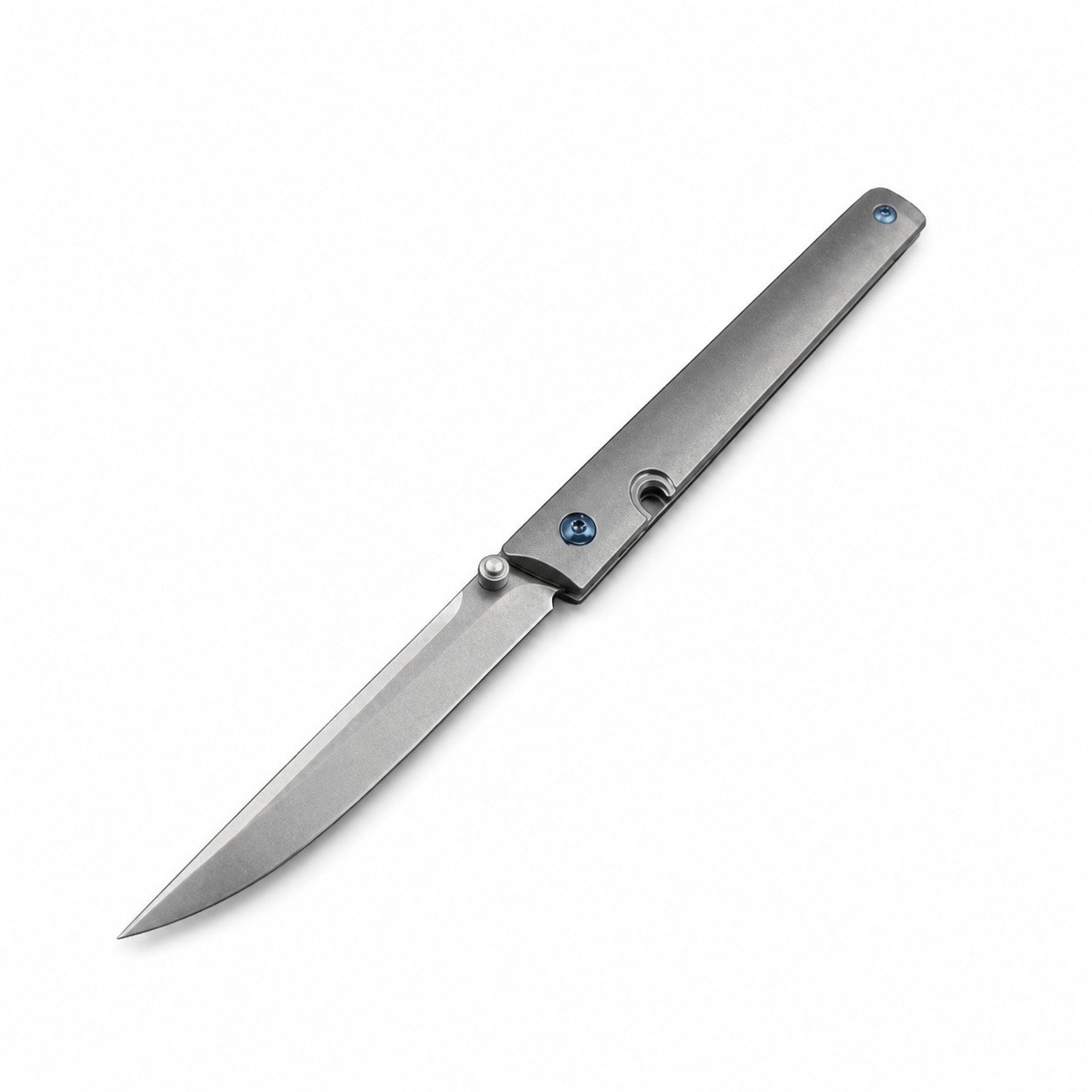
The 7096 Titanium Handle Folding Knife is listed with D2 blade material, an 8.0 cm blade, and a 2.0 mm blade thickness. Its supplied facts do not specify a recommended edge angle, so do not treat either 15 or 20 degrees as confirmed for this model.
A practical next step
Choose the maker’s stated angle where available. Otherwise, preserve the existing bevel and make small, consistent adjustments rather than immediately changing the profile. The next step is to inspect the edge under good light and write down the confirmed guidance before sharpening.
Is 15 degrees always sharper than 20 degrees?
Not necessarily. A narrower angle can support a fine edge, but sharpness also depends on edge consistency, condition, sharpening method, and the material being cut. A poorly formed 15-degree edge may perform worse than a well-maintained 20-degree edge.
Which angle is better for a pocket knife?
Use the manufacturer’s recommendation first. If none is available, consider the knife’s ordinary tasks and preserve its existing bevel. A 20-degree approach may be more forgiving for general use, but the correct choice cannot be confirmed from blade material or appearance alone.