














Understand safety knife blades for ordinary hand cutting by comparing blade access, storage, maintenance, and responsible handling before choosing a tool.
Safety knife blades: start with the task
Safety knife blades should be chosen for the material and cutting motion you actually need, with control and secure storage as priorities. The term does not guarantee that every blade has the same protective feature, so check the product’s stated design rather than assuming a guard, retracting action, or special mechanism.
Use a suitable surface, keep fingers away from the cutting path, and avoid rushing. Store the knife closed or otherwise secured when the design allows.
What to compare
Compare blade length, thickness, handle comfort, weight, edge access, and cleaning requirements. A compact folding knife can reduce exposed blade length during storage, but its pivot and folding area need attention. A fixed blade may be simpler to inspect, especially when stored in a supplied sheath.
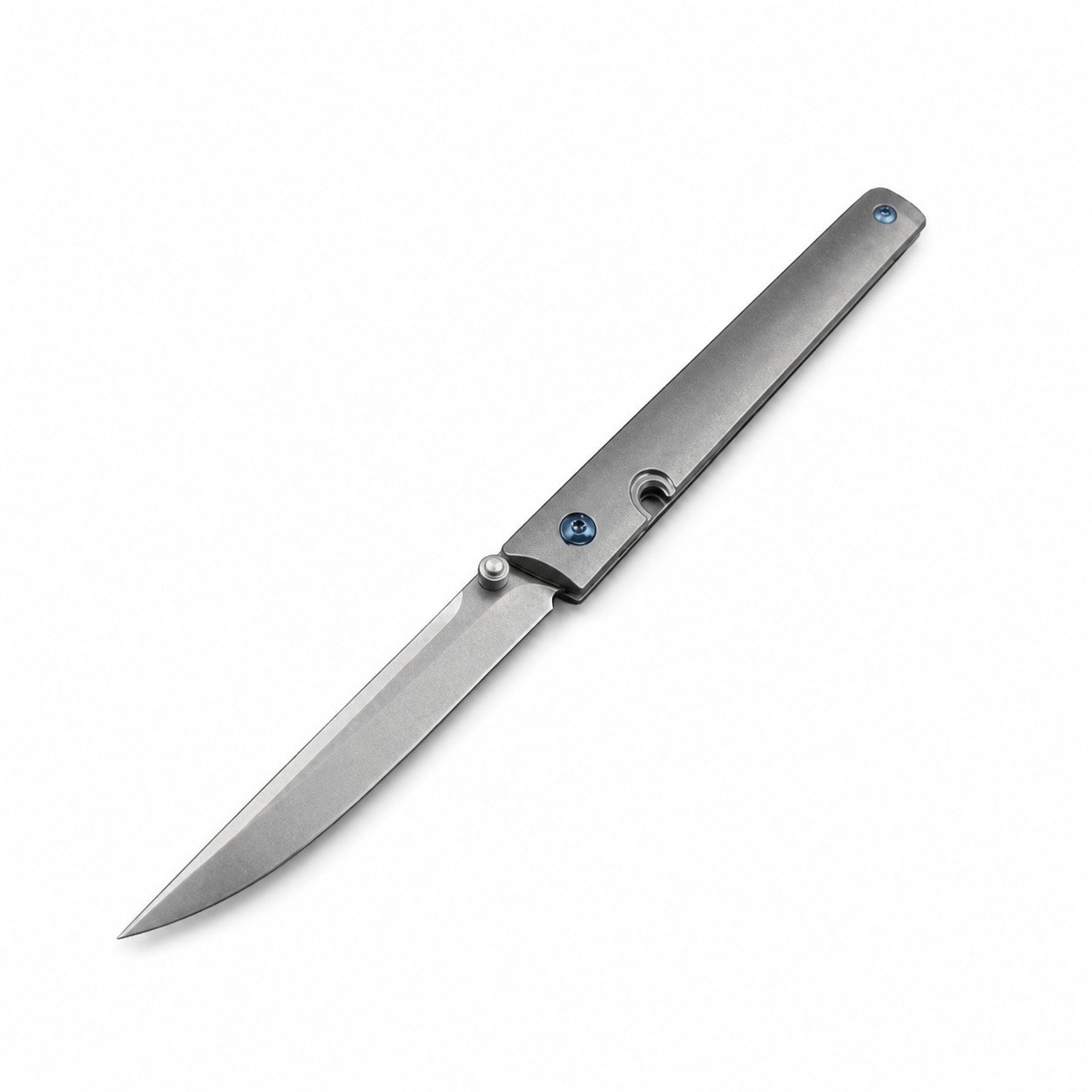
The 7096 Titanium Handle Fold Folding Knife is listed with an 8.0 cm blade, 2.0 mm blade thickness, D2 blade material, titanium alloy handle, and 60 g net weight. These details describe the catalog example and do not establish a universal safety feature.
Care and safe storage
Remove visible residue after use, dry the blade and accessible handle areas, and inspect for damage. Do not use a knife as a pry bar or force it through material. If a folding action becomes stiff or the blade moves unexpectedly, stop using the tool until it has been properly assessed.
Keep knives separated from loose objects and store them where children and unauthorised users cannot access them. Follow applicable local rules and product instructions.
Make a responsible choice
A safer choice is one you can control, clean, and store consistently. Read the listed specifications carefully and match them to the work rather than relying on a broad label.
Your next step is to identify the cutting task and write down the blade-access and storage features you require before comparing products.
Are all safety knife blades retractable?
No. “Safety knife” can describe different designs, and not every product has a retracting or guarded blade. Check the actual product specifications and instructions for the mechanism and handling requirements before use.
How should safety knife blades be stored?
Store them closed or secured according to the design, separated from loose objects and out of unauthorised reach. Keep them dry and inspect for damage. Safe storage supports careful handling but does not remove the need for attention during cutting.