














Learn how to sharpen a pocket knife without a sharpener using cautious household methods, controlled strokes, and simple edge-care checks.
How to sharpen a pocket knife without a sharpener
If you need to sharpen a pocket knife without a sharpener, use a fine, hard, mildly abrasive surface and work slowly. A ceramic mug’s unglazed base can sometimes provide a sharpening surface, while the rough edge of a suitable stone may help in an emergency. Clean the surface first, secure the closed or safely supported knife, and keep your fingers away from the edge.
Use controlled, light strokes
Match the existing bevel as closely as you can. Place one side of the edge against the abrasive surface at a shallow, consistent angle, then draw the blade across the surface from heel toward tip. Use light pressure and repeat a small number of strokes on each side. Do not saw aggressively or change angles repeatedly, because that can make the edge uneven.
After several strokes, check the edge visually and with a very cautious paper test, keeping your fingers clear. Stop if the blade, handle, or improvised surface feels unstable.
When an improvised method is not suitable
An improvised surface is not a replacement for a proper sharpening system. It may be too coarse, uneven, or difficult to control, especially on a damaged edge. Do not sharpen a blade with visible cracks, bends, or loose components. Clean and dry the knife after the process, and store it closed or protected.
A folding knife example
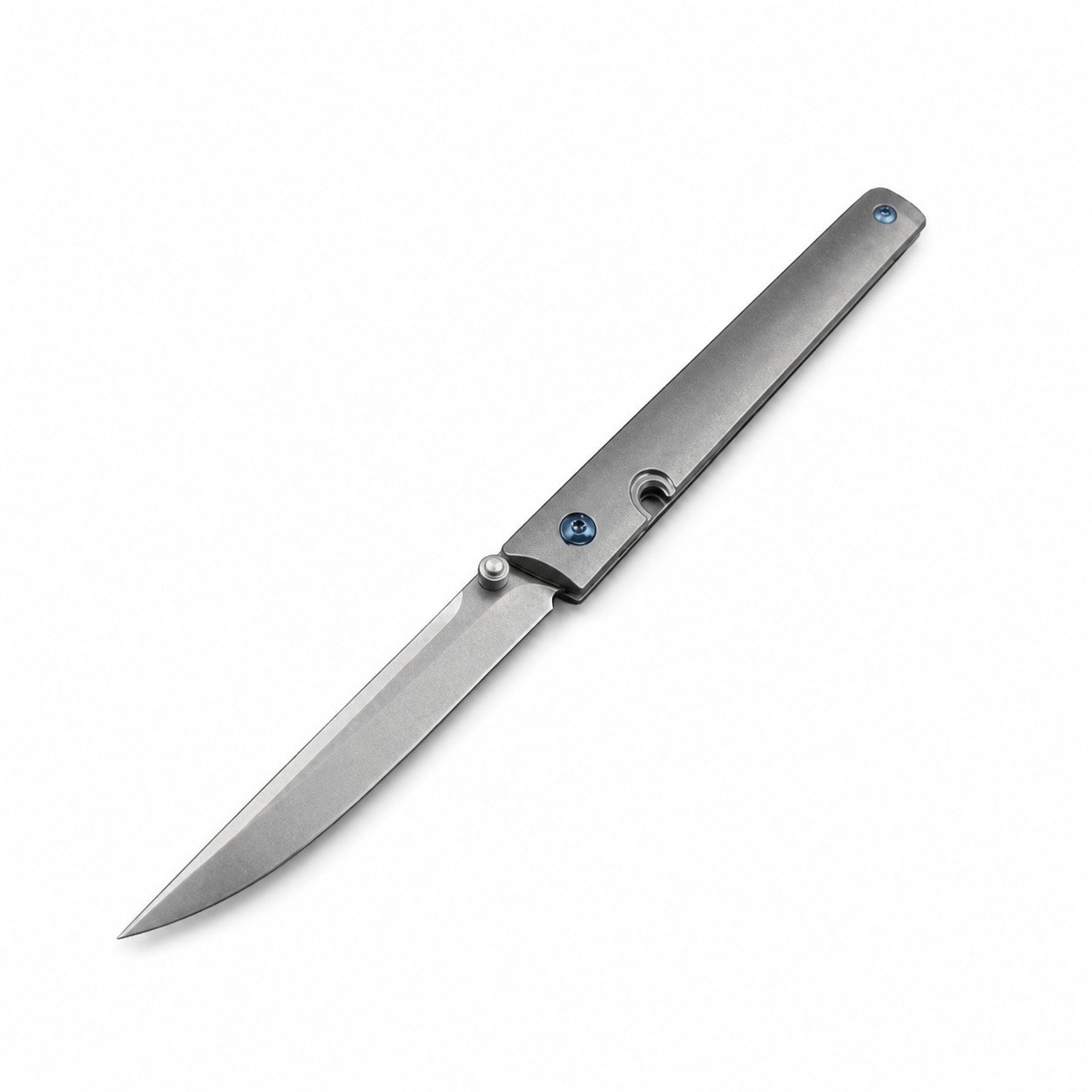
The supplied 7096 folding knife is listed with an 8.0 cm D2 blade and a titanium-alloy handle. Those specifications do not determine the correct sharpening angle, so use the existing bevel as your guide and avoid removing more material than necessary.
Can I sharpen a pocket knife with a ceramic mug?
The unglazed ring on the underside of some ceramic mugs can provide a temporary abrasive surface. Use only a stable mug, light pressure, and consistent strokes. Stop if the surface is glazed, slippery, damaged, or difficult to control.
How do I know when to stop sharpening?
Stop when the edge appears even and cuts a simple test material with less resistance. Avoid repeatedly sharpening just to chase a perfect result. Clean the blade, dry it, and inspect the edge and knife components before storage.