














Plan custom knife sheaths around blade size, carry method, and retention needs, with a practical checklist for ordinary fixed-blade tools.
Custom knife sheaths: start with fit
Custom knife sheaths should be planned around the exact knife, not a general blade category. Measure the blade and handle, note the attachment position, and decide how the sheath will be carried. A good fit should protect the edge, keep the knife secure during ordinary movement, and allow controlled removal without forcing the blade.
Material and component choices
Consider the sheath material, stitching or fasteners, belt or pack attachment, drainage, and the retention method. The material should suit the environment and be easy to inspect and maintain. Avoid assuming that a visually similar sheath will fit a different knife. Small differences in blade thickness, handle shape, or guard design can affect security.
If you are ordering a knife sheath custom to one tool, provide measured dimensions and clear information about the knife’s attachment points. Ask how the maker checks retention and whether the finished sheath is intended for the proposed carry position.
Example: a fixed-blade setup
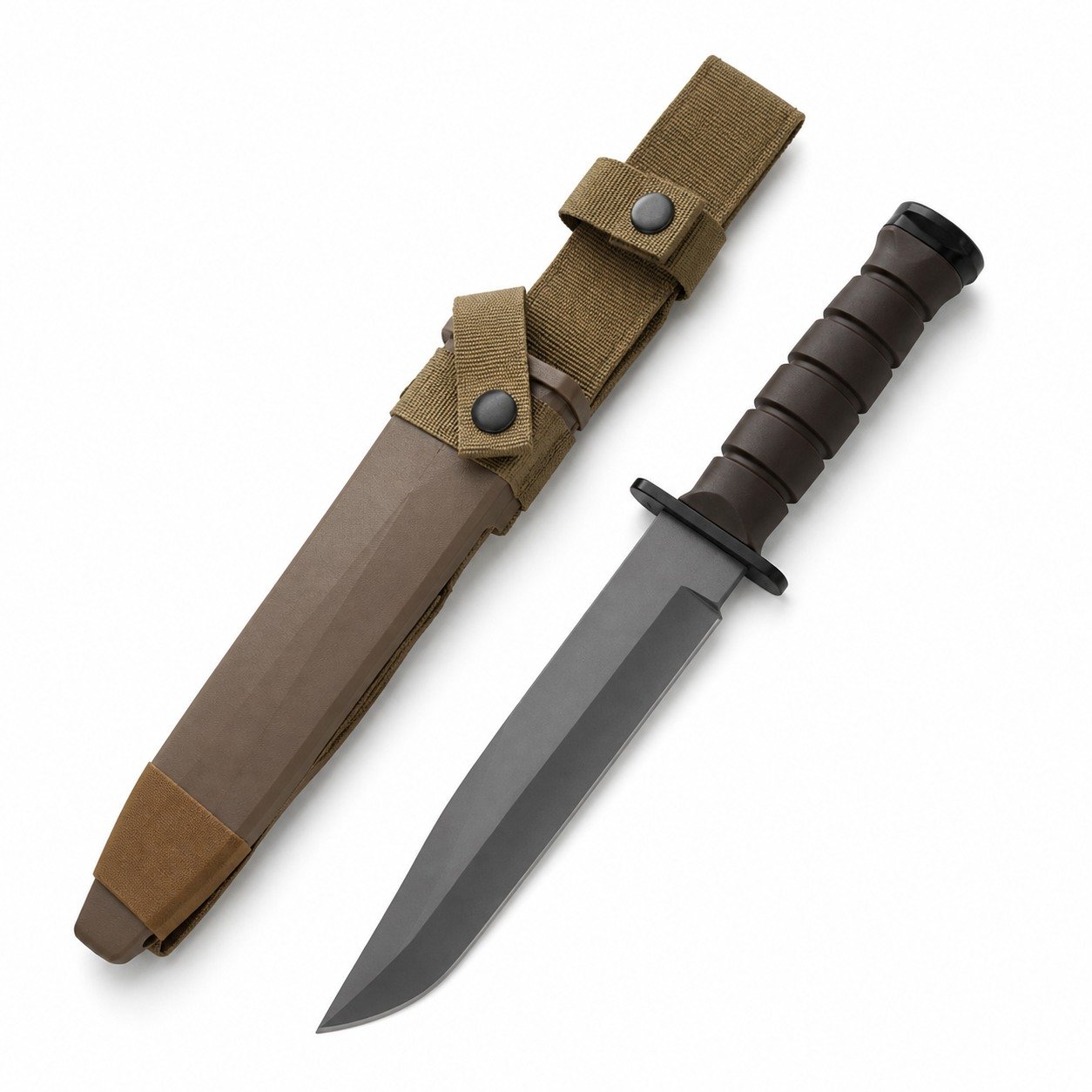
The M10 integrated-keel fixed-blade knife is listed with a 20 cm blade, 5 mm blade thickness, a nylon handle, an overall length of 32.8 cm, and an included K-sheath. It weighs about 400 g. These supplied facts show why sheath planning should account for blade length, thickness, handle material, and carry weight. They do not confirm that any separate custom sheath will fit.
Care and final checks
Before regular carry, inspect the sheath for loose components, sharp edges, and unwanted movement. Keep the knife and sheath clean and dry according to their materials. Test retention carefully over a safe surface, without swinging or dropping the tool. The practical next step is to record the knife’s measurements and compare them with the sheath maker’s fit requirements.
What measurements are needed for a custom knife sheath?
Usually record the blade length, maximum blade width and thickness, handle dimensions, overall knife length, and the position of any guard or attachment point. Also describe the intended carry method. Give the maker measured values from the actual knife rather than relying on a model name alone.
Is a custom knife sheath always safer?
Not automatically. Safety depends on accurate fit, reliable retention, suitable materials, and responsible handling. Inspect the finished sheath before use and stop carrying it if the knife moves unexpectedly, the fasteners loosen, or the edge can contact the opening.