














Learn how dual grit knife blade sharpening stones work, when to use each side and how to finish with controlled, even passes for everyday knives.
Dual grit knife blade sharpening stones
Dual grit knife blade sharpening stones combine a coarser surface for more material removal with a finer surface for refining an edge. Start by identifying which side is coarse and which is fine, then secure the stone on a stable surface. The exact grit values and preparation requirements vary, so follow the stone maker’s instructions.
Use the coarse side only when the edge needs meaningful correction or reshaping. For a lightly dull edge, beginning with the fine side may remove less material and make maintenance easier.
A controlled sharpening workflow
Clean and inspect the knife before sharpening. Keep the intended angle steady, use light pressure and make smooth passes along the edge. Work in a consistent pattern and check progress frequently. Avoid rushing from one end of the blade to the other if you cannot keep the angle controlled.
Once the edge has been corrected, switch to the finer side to refine it. Clean away abrasive residue and inspect the edge under good light. If the stone requires water or another preparation, use only the method specified for that product and let it dry as directed.
Choose the stone for the task
A dual-grit stone is useful when one accessory needs to cover both correction and finishing, but it does not make every sharpening problem simple. Deep chips, unusual damage or uncertainty about the edge may justify professional assessment. Never test sharpness carelessly with a finger.
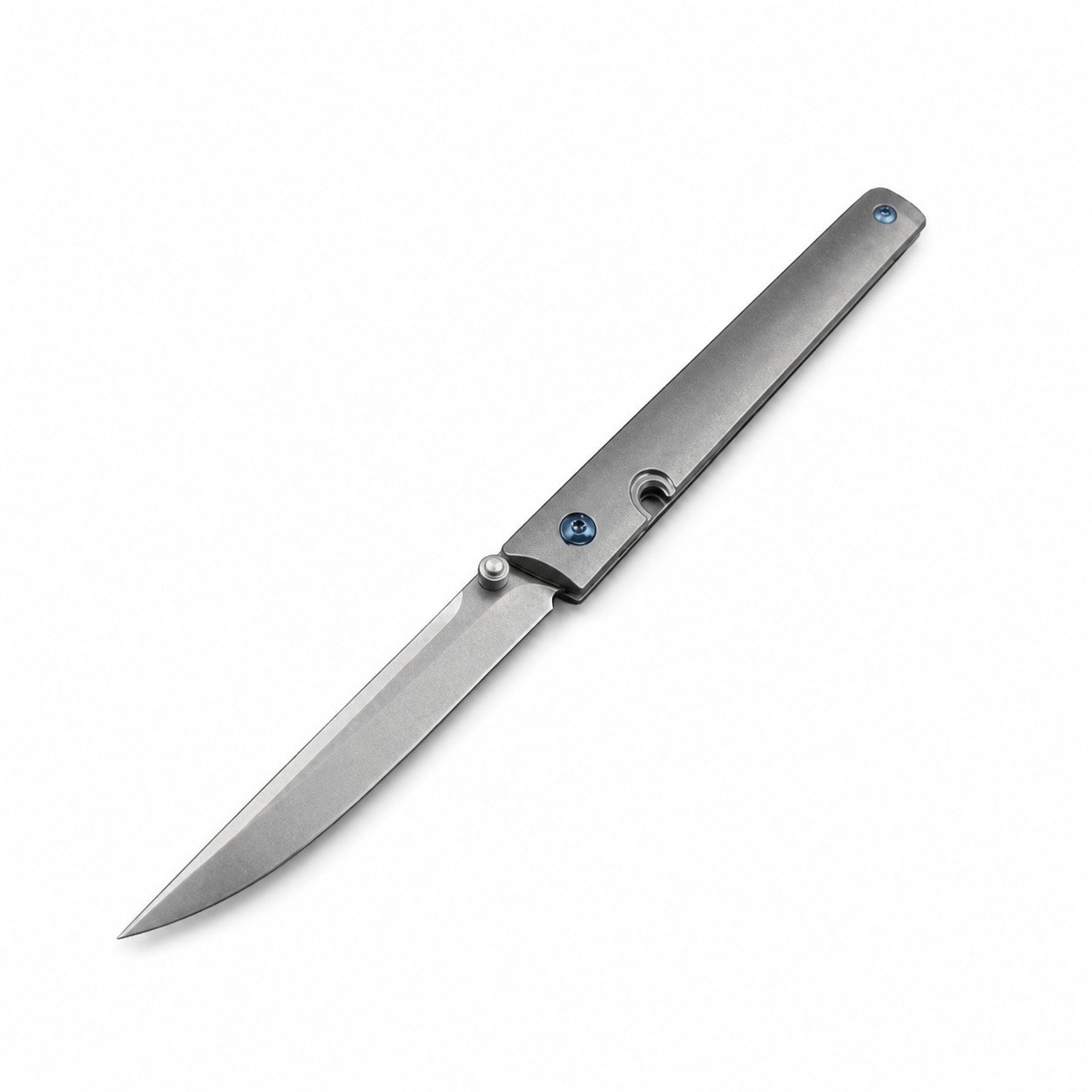
The SEWARD 7096 Titanium Handle Fold Folding Knife is listed with a D2 blade and an 8.0 cm blade length. That catalog information does not identify the ideal grit sequence for every example, so confirm the blade and stone instructions before use.
Which side of a dual-grit stone should I use first?
Use the coarse side first when the edge needs substantial correction, then move to the fine side to refine it. If the knife is only slightly dull, the fine side may be enough. Identify the sides from the product instructions rather than assuming their order from colour or appearance.
How much pressure should I use on a sharpening stone?
Use controlled, light pressure and keep the angle consistent. Pressing harder can remove too much material, create an uneven bevel or make the blade slip. Make a few passes, check the edge, and continue only if needed. Secure the stone before starting and keep your fingers clear.