













Understand what a triad lock knife refers to, how to compare folding-knife specifications, and how to care for a lock-equipped knife responsibly.
What is a triad lock knife?
A triad lock knife generally refers to a folding knife using a lock design marketed under the name “Tri-Ad.” The term describes a specific locking concept, but a product title alone should not be treated as proof that every knife has that mechanism. Confirm the manufacturer’s stated specifications before buying.
What to check before choosing one
Review the blade material, blade length, handle construction, overall size, weight, and opening and closing method. Consider whether the knife is comfortable for ordinary cutting and whether you can inspect and maintain it easily. Do not infer a lock type from photographs alone, especially when a listing does not state the mechanism.
Responsible use and maintenance
Use a folding knife for controlled cutting rather than prying, twisting, or striking. Keep fingers clear of the blade path, close and store the knife carefully, and follow the maker’s care information. Wipe away moisture and residue, then dry the knife before storage. Check local carrying rules before taking it outdoors.
A catalog example without an assumed lock
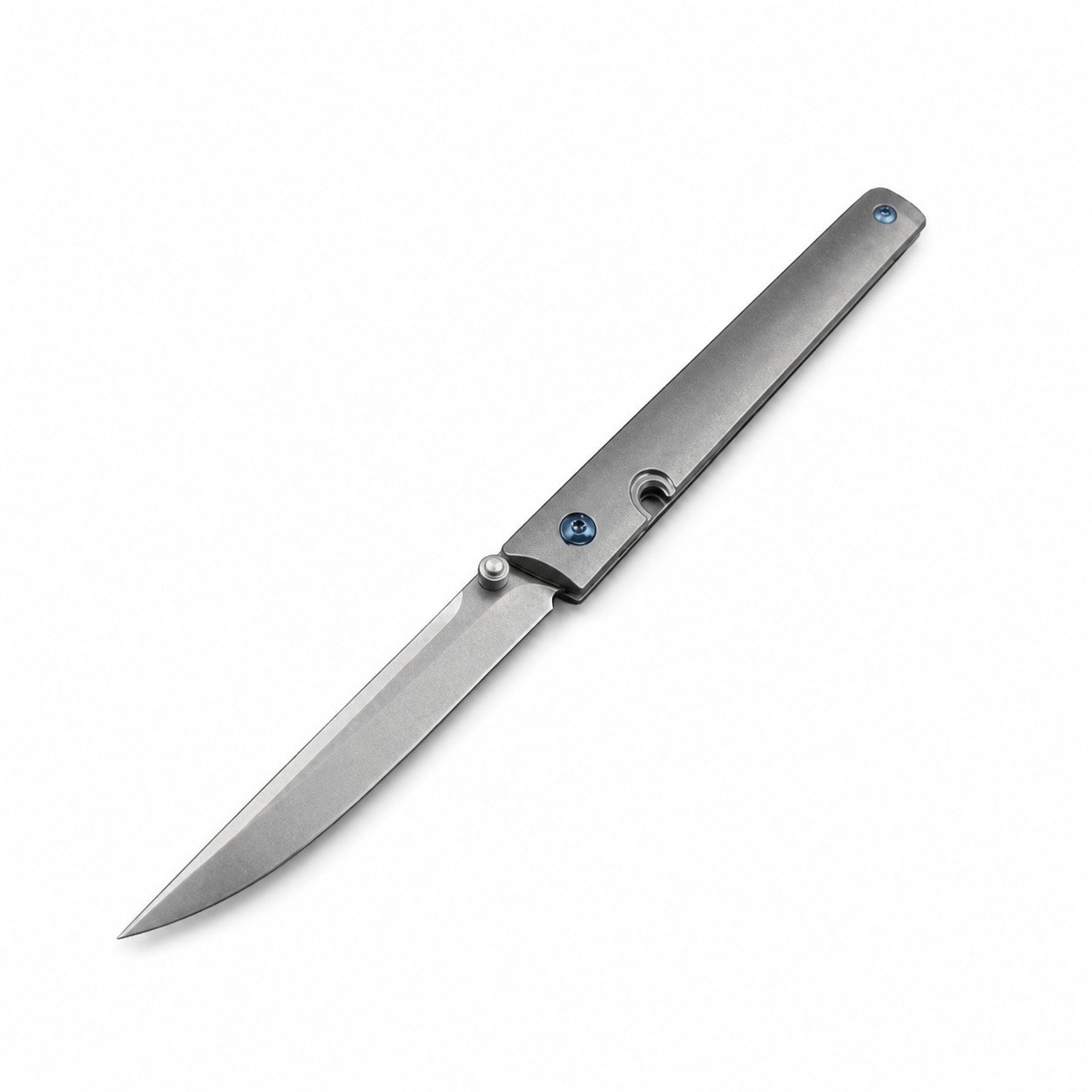
The 7096 Titanium Handle Fold Folding Knife is listed with a D2 blade, titanium alloy handle, 8.0 cm blade length, 19.2 cm total length, and 60 g net weight. The supplied facts do not identify a Tri-Ad or other locking mechanism, so that feature should not be assumed.
Does every folding knife called a triad lock knife use the same lock?
No. The name should be verified against the manufacturer’s specifications and the exact model. Product titles and images may be incomplete, so do not assume a particular mechanism without clear documentation.
How should I care for a locking folding knife?
Keep the blade and handle clean and dry, avoid forcing the lock or using the knife as a lever, and follow the maker’s maintenance guidance. Store it closed when appropriate and inspect the action before ordinary use.