













Choose a sensible hunting knife sharpening angle by balancing edge support, cutting needs, and repeatable technique during routine knife care.
What hunting knife sharpening angle should you use?
For a hunting knife sharpening angle, a practical starting range is about 20 degrees per side for general outdoor cutting. The exact sharpening angle for a hunting knife depends on the blade’s existing bevel, thickness, steel, and intended work. Match the original edge when possible instead of removing unnecessary material to chase a new angle.
Why the angle matters
A lower angle can feel keen but may be less forgiving during contact with tougher materials. A wider angle generally provides more edge support for robust everyday work, though it may feel less slicey. Consistency matters more than chasing a precise number, so use a guide if your technique is not yet steady.
A careful sharpening workflow
Clean and inspect the blade first. Secure the sharpening tool, keep fingers away from the edge, and use light, controlled passes. Work evenly on both sides, remove only enough material to restore the edge, and check progress frequently. Finish by removing any loose burr and wipe the blade before storage.
SEWARD catalog example
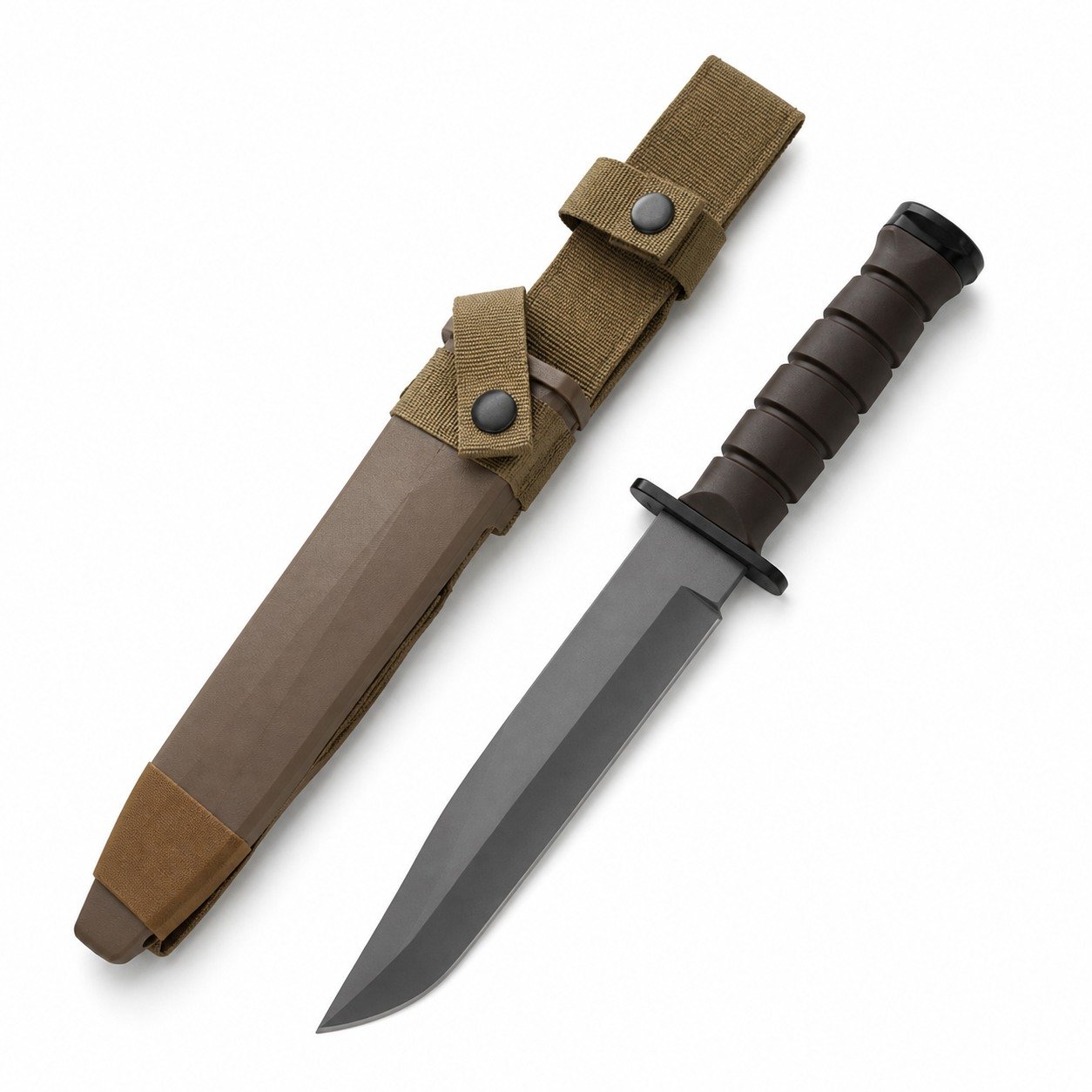
The supplied M10 Integrated Keel Fixed Blade Knife has a 1095 high-carbon steel blade, 20 cm blade length, 5 mm blade thickness, nylon handle, and K-sheath. Those facts do not specify a factory sharpening angle, so use the existing bevel as your reference rather than assuming one from the material name.
Practical next step
Inspect the bevel under good light, mark it lightly with a removable marker, and make a few gentle guided passes to confirm your angle before continuing.
What angle should I sharpen a hunting knife at?
About 20 degrees per side is a useful general starting point, but the existing bevel and the knife’s work should guide you. A tougher-use edge may suit a wider angle. Keep both sides consistent and remove as little material as needed.
Should I sharpen both sides at exactly the same angle?
For a conventional double-bevel knife, yes, aim for a consistent angle on each side. Uneven passes can create an irregular edge and make future maintenance harder. A sharpening guide can help, but gentle pressure and frequent inspection remain important.