














Learn how carbon steel knife storage should control moisture, reduce contact damage, and support regular inspection during long-term storage.
Carbon steel knife storage basics
Carbon steel knife storage should keep the knife clean, fully dry, protected from contact, and easy to inspect. Before storing it for a long period, remove ordinary residue, dry the blade carefully, and place it in a clean sleeve, sheath, or compartment that does not trap grit against the surface.
Avoid leaving a carbon steel knife loose in a damp bag, crowded drawer, or container with wet outdoor equipment. Storage conditions matter because unseen moisture can remain on the blade or around handle and joint areas.
Choose a suitable storage location
Select a stable, dry location away from condensation, splashes, and sudden environmental changes where practical. Keep the knife separated from metal objects that may scratch it or transfer debris. A protective covering should fit without rubbing the edge and should itself be clean and dry.
Do not seal a knife while it is damp. If a container or sleeve has collected moisture, dry and clean it before returning the knife. Storage protection should reduce contact and contamination, not conceal a problem from inspection.
Build an inspection routine
During long-term storage, inspect the blade and accessible handle areas periodically. Look for new spots, residue, moisture, or changes in the storage material. If anything appears, remove the knife, clean it cautiously according to the separate routine-care guidance, dry it, and reassess the storage conditions.
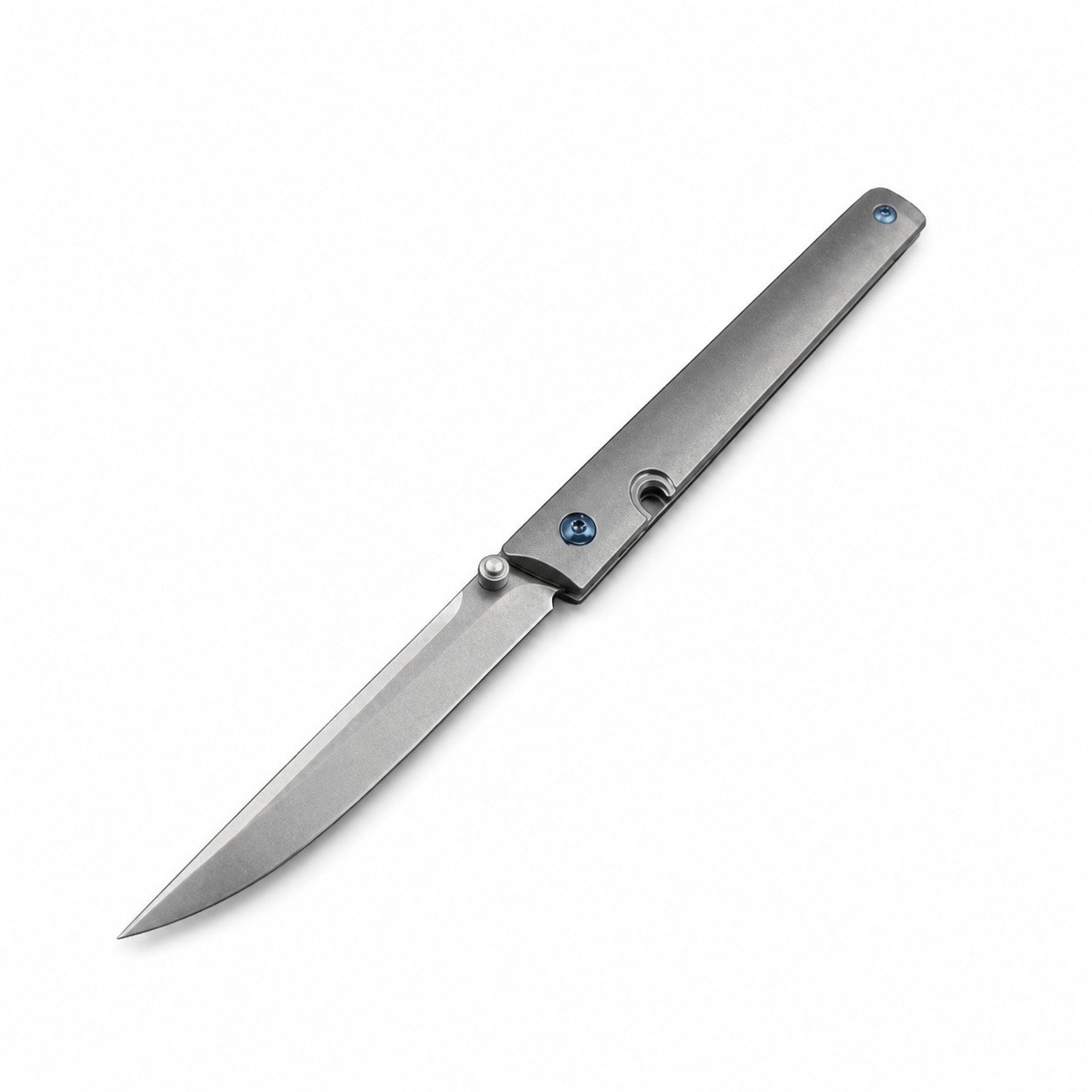
This guide concerns storage rather than the full cleaning or treatment of carbon steel. The supplied catalog example has a D2 blade and titanium alloy handle, so it is not evidence of carbon-steel properties or a carbon-steel storage requirement.
Next step
Prepare a clean, dry storage space today and set a calendar reminder for a periodic visual inspection.
Should a carbon steel knife be stored in leather?
Leather may be suitable in some situations, but suitability depends on its condition, treatment, fit, and moisture behavior. Do not store a damp knife in a damp or chemically treated sheath. Inspect both surfaces and follow guidance appropriate to the exact sheath and knife.
How often should long-term carbon steel storage be checked?
Check periodically rather than waiting for visible damage. The interval depends on the storage environment and the knife’s condition. Inspect after moving the knife, after humid or wet conditions, and at a regular schedule that lets you notice moisture or surface changes early.