














Learn how to store a ceramic knife with stable support, separation from hard objects, and regular checks for chips or accidental contact.
Ceramic knife storage essentials
Ceramic knife storage should prevent edge contact, impact, and contact with loose hard objects. Store the knife in a dedicated sheath, sleeve, or protected compartment that keeps the blade from rubbing against metal, stone, or other tools. Place it where it will not be knocked, compressed, or used as a surface for other items.
Ceramic blades can be resistant to some forms of wear but may be less tolerant of impact or bending than many metal blades. Avoid tossing one into a mixed drawer or bag, even when the blade appears clean.
Choose support, not just a cover
A cover should fit securely without pressing hard against the edge. Padding or a smooth internal surface can help reduce movement, but loose fabric, trapped grit, or a badly fitted sleeve can create its own risks. Inspect the inside of the storage solution before use and remove dust or particles.
Keep the stored knife dry and separate from damp materials. If the knife has a handle or folding structure, follow its specific care instructions and do not assume ceramic-blade guidance covers every component.
Inspection before and after storage
Check the blade under good light for chips, cracks, or unusual marks before putting it away and before using it again. Do not continue using a damaged blade simply because the damage seems small. Clean residue with a suitable soft cloth, dry the knife, and return it to protected storage.
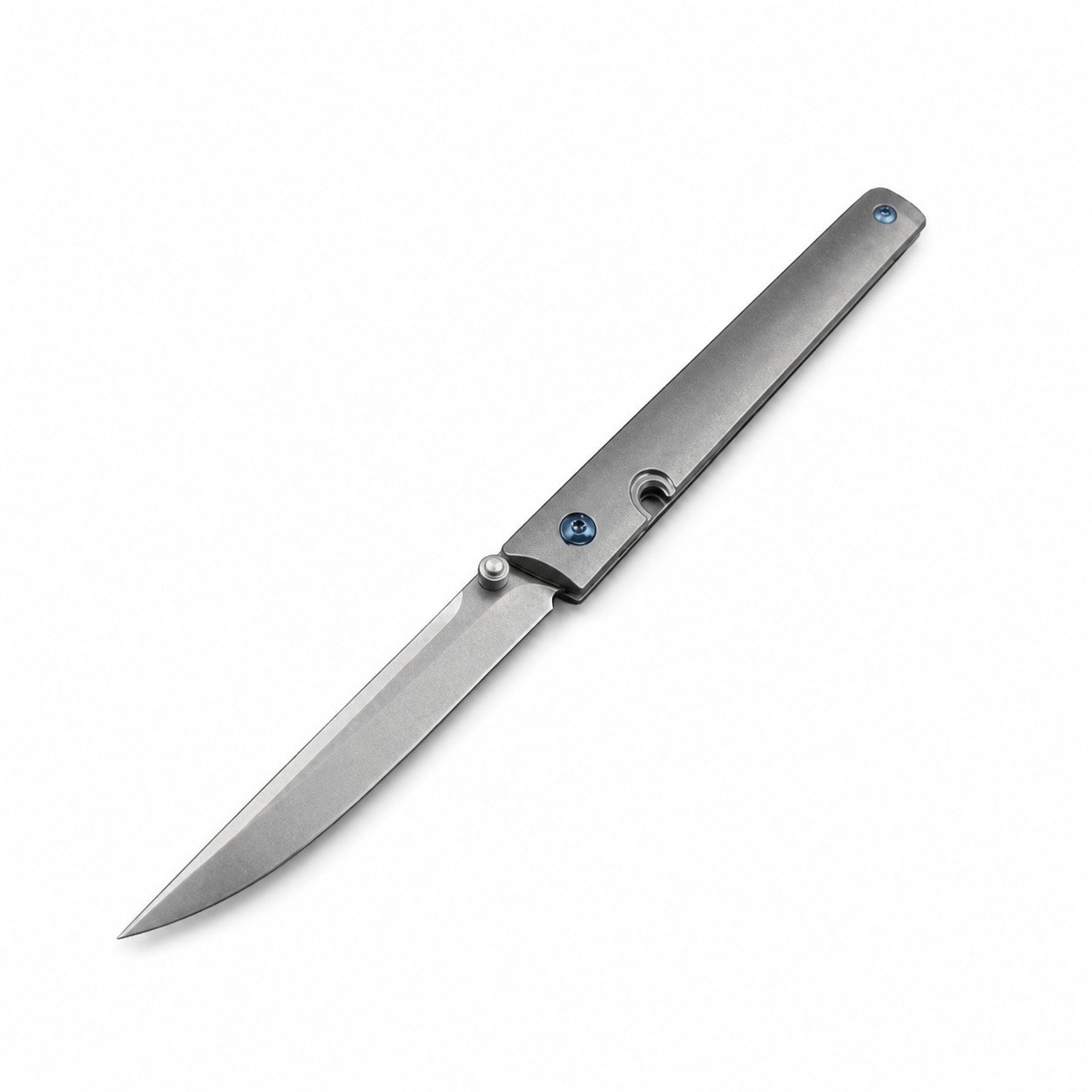
The supplied product example is a folding knife with a D2 blade and titanium alloy handle, not a ceramic knife. It is included only as a catalog example and does not establish ceramic properties or storage requirements.
Next step
Replace any crowded drawer storage with a dedicated protective sleeve or compartment, then inspect the knife and the inside of its new storage space.
Can a ceramic knife be stored loose in a drawer?
Loose drawer storage is not recommended because the blade may contact hard objects or receive impact when the drawer moves. Use a dedicated protective sleeve, sheath, or compartment that keeps the edge separated and prevents the knife from shifting.
Should ceramic knife storage be airtight?
Airtight storage is not automatically necessary. The important priorities are dryness, cleanliness, protection from impact, and separation from abrasive or hard objects. Avoid sealing a damp knife or dirty sleeve, since trapped moisture or residue can create other maintenance problems.