














Compare fixed blade vs folding knife designs by carry, cleaning, strength, and everyday cutting needs so you can choose with confidence.
Fixed blade vs folding knife: the direct answer
A fixed blade is usually the simpler choice when you prioritise easy cleaning, a rigid cutting tool, and outdoor use. A folding knife is usually better when compact carry, quick storage, and everyday convenience matter most. The right option depends on where the knife will be used, how often it must be cleaned, and whether a sheath or pocket-friendly format suits your routine.
The pocket knife vs fixed blade decision is therefore less about one being universally better and more about matching the format to the task. Keep local laws, safe handling, and your own storage arrangements in mind before choosing.
When a fixed blade makes sense
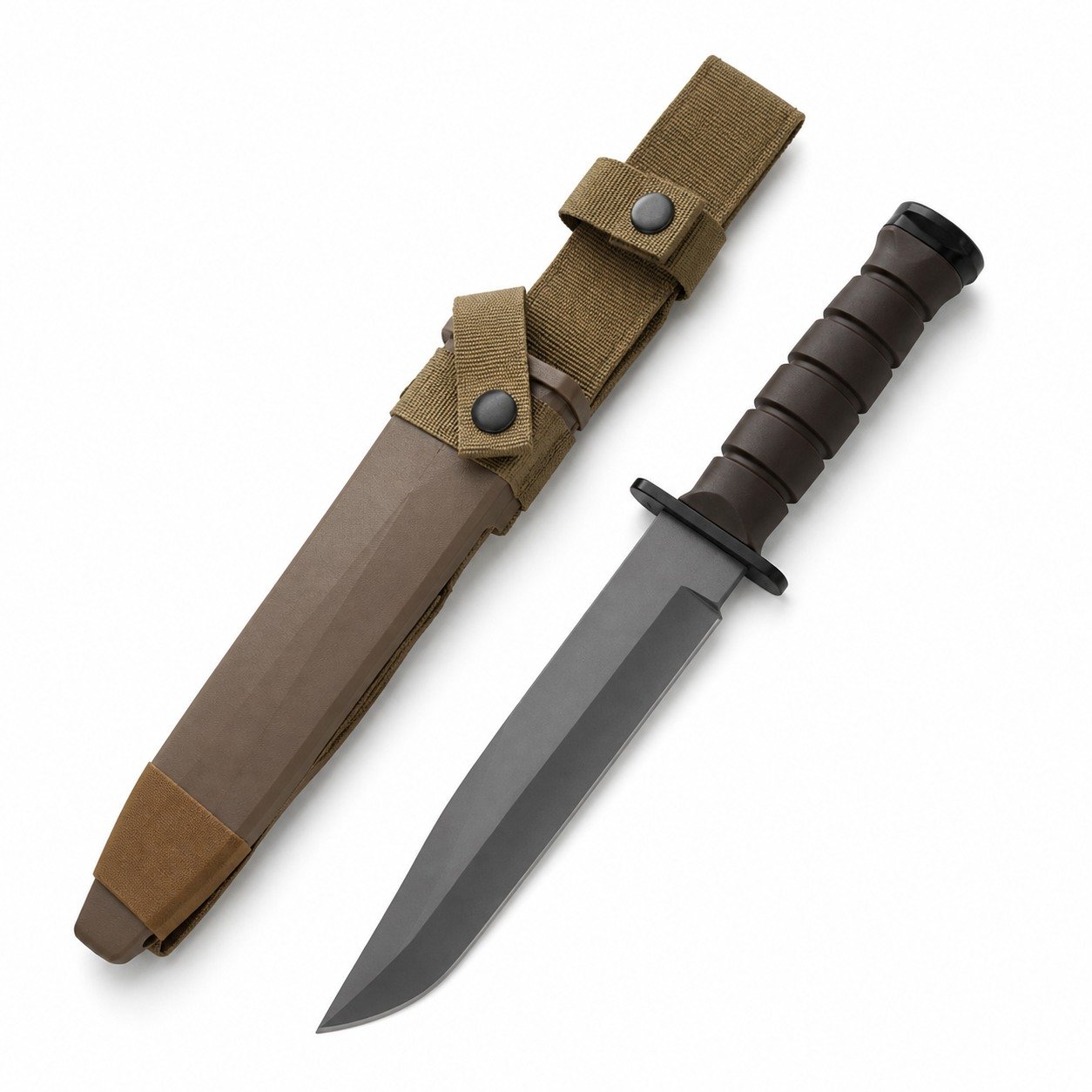
A fixed blade has no folding joint, so its working structure is straightforward. That can make wiping and inspecting the knife easier, especially after outdoor cutting. A supplied sheath can also provide a defined storage place. As one catalog example, the M10 Integrated Keel Fixed Blade Knife has a 20 cm blade, 5 mm blade thickness, 1095 high carbon steel, a nylon handle, and a K-sheath.
Its listed weight is about 400 g, so it is better considered as a substantial outdoor tool than as a light pocket option. The specifications describe the product, not every fixed blade in general.
When a folding knife is more practical
A folding knife takes up less space when closed and can be convenient for ordinary cutting tasks. It needs more attention around the pivot and folding area because dirt or moisture can collect in places that are not present on a fixed blade. Before carrying one, confirm that it closes securely and that its design is appropriate for your location and intended use.
A folding format can also be easier to keep in a compact organizer, provided it is stored closed and separated from loose objects that could damage the handle or edge.
Care and selection checklist
Choose the format first, then compare size, weight, handle comfort, storage, and cleaning needs. After use, remove visible residue, dry the knife fully, and store it in a clean, secure place. Do not force a blade through material or use a knife for a job outside its design.
Your practical next step is to write down your three most common cutting situations and decide whether compact storage or simple maintenance matters more.
Is a fixed blade safer than a folding knife?
Neither format is automatically safer. A fixed blade avoids a folding joint, while a folding knife can be stored closed. Safe handling depends on a secure grip, controlled cutting, suitable storage, and following applicable local rules.
Which is easier to clean, a fixed blade or folding knife?
A fixed blade is generally simpler to wipe and inspect because it has no pivot or folding gap. A folding knife can still be maintained effectively, but its pivot area and handle spaces deserve extra attention after damp or dirty use.