














Learn how knife locks differ, what specifications to verify, and how to choose a locking folding knife for careful everyday outdoor cutting.
What knife locks do
Knife locks are mechanisms intended to help keep a folding blade in an open or closed position, depending on the design. When comparing knife lock types, focus on the manufacturer’s stated mechanism, how it is operated, and whether it suits your ordinary cutting tasks. Never assume a lock from a product name or photograph alone.
A locking folding knife still requires careful handling. Keep fingers away from the blade path, open and close it deliberately, and stop using it if the mechanism feels damaged, loose, or unpredictable. A lock is not a substitute for controlled cutting or safe storage.
Common folding knife lock types
Common designs include back locks, liner-style locks, frame-style locks, button or plunge locks, and slipjoint-style systems. Their shapes and operating points differ, and product terminology can vary between manufacturers. The useful comparison is not simply which name sounds strongest, but whether the listed mechanism is clear, accessible, and appropriate for your needs.
When a listing omits the lock type, ask for confirmation before purchase. Also check whether the blade is folding, whether the handle offers a stable grip, and whether the dimensions suit your carry method. Do not infer internal parts or security from images.
Care and inspection
Keep the pivot and handle area free of dirt, and clean and dry the knife according to the maker’s instructions. Inspect the lock area without placing fingers in the blade path. If you notice unusual movement, incomplete engagement, or damage, set the knife aside until it has been properly assessed.
Catalog example
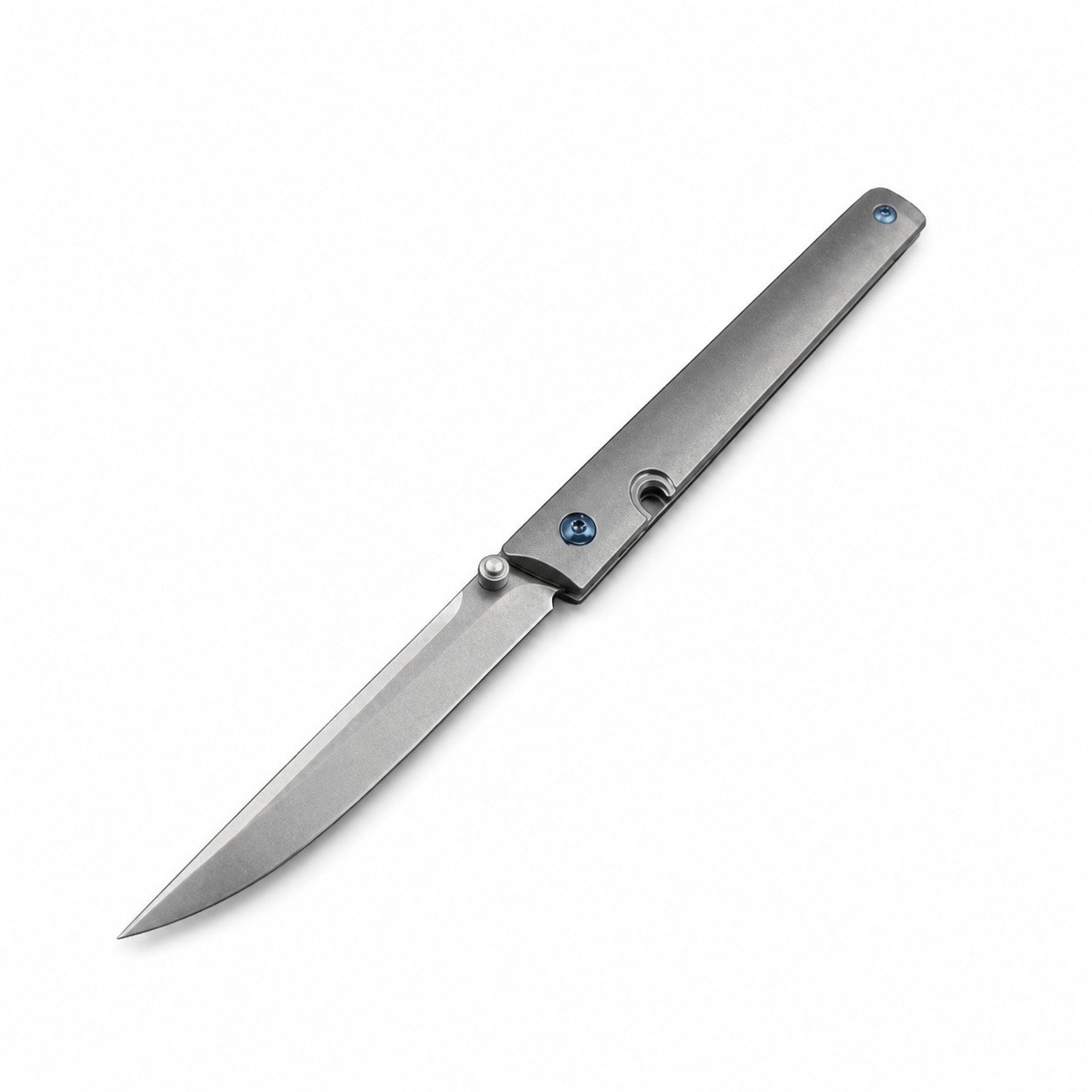
The 7096 Titanium Handle Folding Knife is listed with an 8 cm D2 blade and titanium alloy handle. The supplied facts do not identify its lock type, so no specific knife lock should be attributed to this example.
Is a locking folding knife automatically safer?
No. A lock may help control an open blade, but safety also depends on the knife’s condition, handling, storage, and suitability for the task. Use deliberate movements, keep hands clear of the blade path, and do not rely on an unverified mechanism.
How can I identify knife lock types?
Start with the manufacturer’s written specification and product documentation. Then compare the stated operating point with a reliable reference for that lock family. If the listing does not name the mechanism, treat it as unknown rather than guessing from the handle shape.