










Learn how to choose and hold a knife sharpening angle for folding and outdoor tools, with simple steps for safer, more consistent edge care.
What knife sharpening angle should you use?
A practical knife sharpening angle depends on the blade’s existing bevel, thickness, and intended cutting work. For many everyday folding and outdoor knives, a moderate angle around 15–20 degrees per side is a useful starting reference, but it is not a universal rule. The safest choice is usually to match the existing edge rather than force a new angle.
A knife sharpening angle chart can help organize options, but charts should be treated as guidance. A thinner edge may benefit from a finer angle, while a more robust working edge may need a wider angle. Product specifications rarely reveal the exact factory bevel, so inspect the edge and proceed gradually.
How to hold the angle
Keep the blade stable and move it across the abrasive with controlled, even strokes. Many sharpeners use an angle guide; if sharpening freehand, consistency matters more than chasing a mathematically exact number. Use light pressure and alternate sides regularly so the bevel develops evenly.
Do not rush to remove large amounts of material. Check progress often, keep fingers away from the cutting edge, and stop if the edge or equipment behaves unexpectedly. A clean, dry blade is easier to inspect before sharpening.
Choosing an angle for everyday cutting
Use a smaller angle only when the blade and task support a fine edge. For general outdoor or folding-knife use, durability and control may matter more than maximum keenness. The correct angle of knife sharpening is therefore a compromise between cutting feel, edge stability, and how the knife is used.
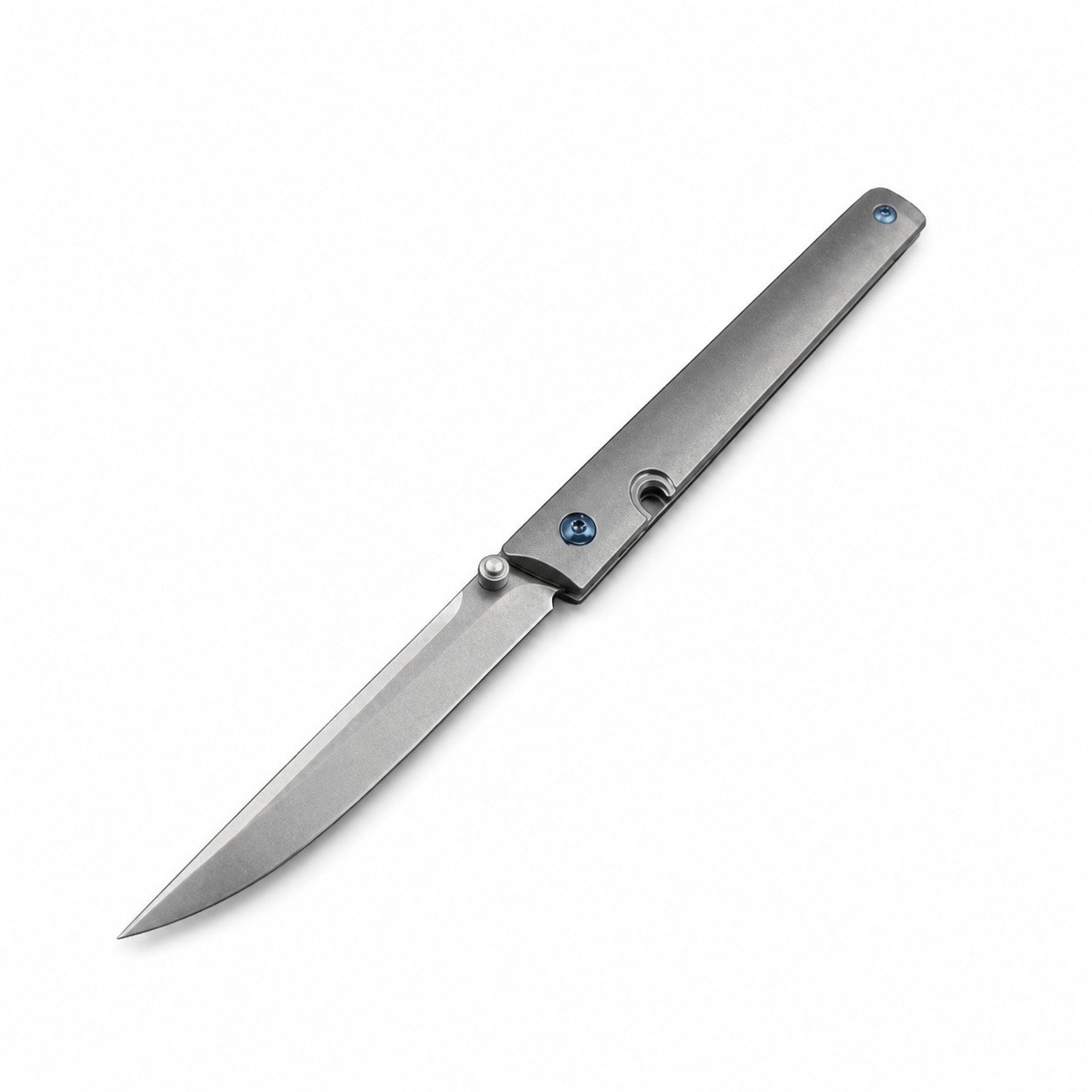
The supplied 7096 folding knife lists a D2 blade, but its exact factory sharpening angle is not provided. Do not infer the angle from the steel name; examine the actual edge and maintain its existing geometry where possible.
Practical next step
Mark the bevel lightly with a suitable marker, make a few gentle sharpening passes, and inspect whether the contact is even. Adjust gradually instead of changing the angle abruptly.
What angle should I sharpen a folding knife at?
Start by matching the existing bevel. If it is unclear, a moderate angle around 15–20 degrees per side is a common reference for many everyday knives, but the suitable angle depends on blade geometry and task. Use light pressure and change the angle gradually.
Are knife sharpening angles the same on both sides?
Many conventional edges use similar angles on both sides, but some blades are intentionally ground differently. Inspect the existing bevel and follow the product guidance when available. Do not assume symmetry if the edge visibly indicates another design.