














Use this knife sharpening guide to assess dullness, choose a careful method, and maintain a dependable everyday cutting edge without guesswork.
Knife sharpening guide basics
A useful knife sharpening guide starts with diagnosis: determine whether the edge is simply dull, has a rolled section, or has visible chips. Mild dullness can often be addressed with a suitable sharpening stone or other purpose-made system. Damage requires more care. Clean and secure the knife, keep the edge away from your fingers, and work with light, repeatable strokes rather than trying to sharpen quickly.
A careful sharpening workflow
First inspect the edge under good light. Next choose an abrasive appropriate to the condition and follow its instructions. Maintain the same angle on both sides, make controlled passes from the heel toward the tip, and use fewer strokes than you think you need. Wipe away residue and reassess frequently. A consistent angle and patient pressure are more useful than force.
Folding-knife considerations
Keep the folding knife stable and ensure the blade cannot unexpectedly close or move during maintenance. Avoid sharpening near distractions, loose clothing, or unstable surfaces. Do not infer the correct angle, steel behavior, or lock design from appearance alone. If the edge has a deep chip or the mechanism is damaged, pause and use a suitable professional or purpose-built option.
Practical next step
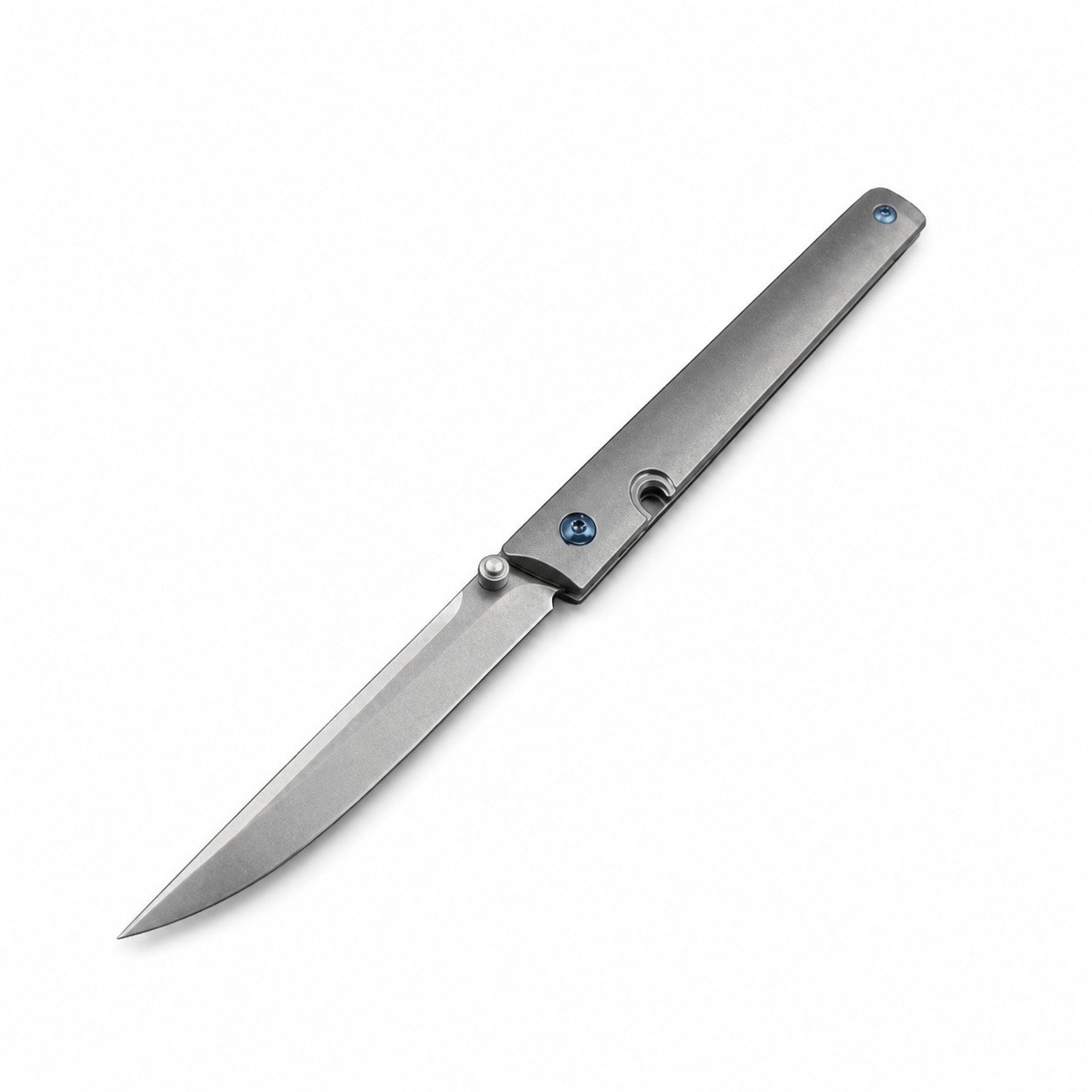
After sharpening, test the edge on a safe everyday material without placing fingers near the cutting path. Record which method and number of passes worked, then clean and store the knife appropriately. The 7096 Titanium Handle Folding Knife is listed with a D2 blade and titanium-alloy handle, but its supplied facts do not specify a sharpening angle; follow the selected system’s guidance instead.
How often should a folding knife be sharpened?
There is no universal schedule. Sharpen when cutting performance declines, not simply after a set period. Light, regular maintenance may reduce the need for aggressive sharpening, while frequent or demanding cutting can require earlier inspection.
Should I sharpen a chipped edge at home?
Small imperfections may be manageable with the right equipment and experience, but a deep chip or uneven damage is a reason to stop and choose a suitable repair method. Avoid removing excessive material just to make the edge look uniform.