












Learn how a knife sharpening jig supports repeatable edge work, what to check before buying, and how to sharpen a folding knife cautiously.
What a knife sharpening jig does
A knife sharpening jig helps hold a blade, guide an abrasive, or support a more repeatable angle during sharpening. It can make the process easier to control, but it does not remove the need to match the jig to the blade. Check the jig's supported blade length, thickness, width, clamping method, and angle range before use.
Choose a jig for the actual knife
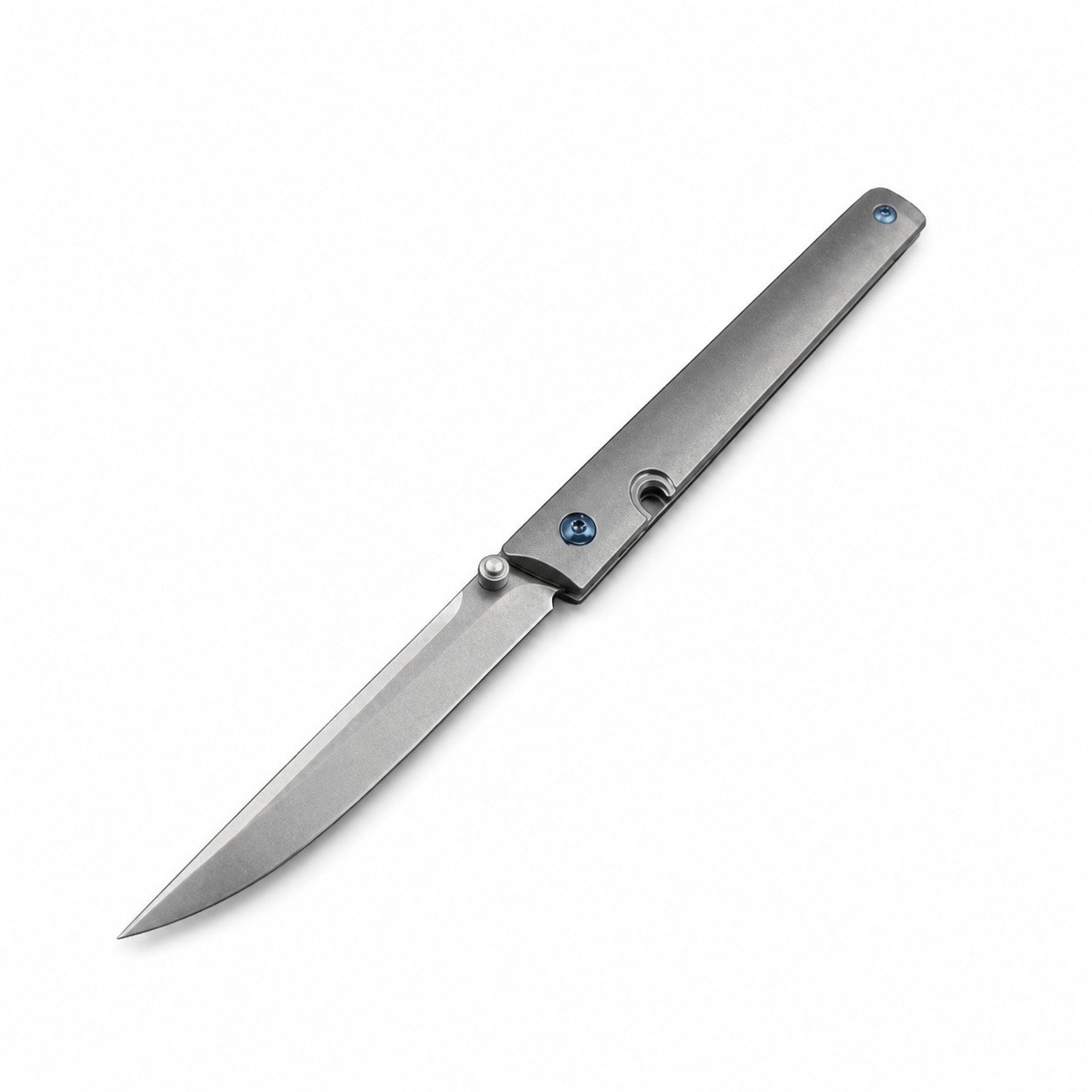
Measure the knife and compare its shape with the jig's stated compatibility. A folding knife may require careful positioning so the handle and folding area do not interfere with the clamp. The supplied 7096 folding knife is listed with an 8 cm blade, 1.2 cm blade width, 2 mm blade thickness, and a 60 g net weight. Its D2 blade and titanium-alloy handle are product facts, but they do not confirm compatibility with any particular jig.
A cautious sharpening workflow
Clean and secure the knife before sharpening. Follow the jig instructions for clamping and angle selection, use light controlled passes, and check progress often rather than removing unnecessary material. Keep hands clear of the edge and work in a stable location. Afterward, remove abrasive residue, dry the blade, and store the folding knife closed. If the jig cannot hold the blade securely, stop and choose a compatible setup.
A practical next step
Measure the blade and identify the jig's supported dimensions and angle system. Practise the setup without applying an abrasive first, confirming that the knife is stable and the cutting edge can be reached safely.
Does a sharpening jig guarantee a perfect edge?
No. A jig can support consistency, but results still depend on correct compatibility, angle selection, abrasive condition, pressure, and technique. Secure the knife and inspect the edge frequently instead of assuming that a fixed guide can compensate for every error.
Can I use any jig for a folding knife?
No. The jig must accommodate the blade's length, width, thickness, shape, and the handle or folding area. Confirm compatibility before clamping. If the knife cannot be held securely without stressing its mechanism, use another suitable sharpening method.