














Find the sharpest pocket knife for everyday cutting by balancing edge performance, carry size, materials, maintenance, and responsible use.
What Makes the Sharpest Pocket Knife?
The sharpest pocket knife is not necessarily the one with the most dramatic description. For everyday cutting, useful sharpness means an edge that performs cleanly for the intended task and can be maintained responsibly. Blade geometry, edge condition, handling, and the material being cut all affect the result.
When comparing a pocket knife sharp enough for regular carry, start with the job, then assess size, weight, blade details, and care requirements. A sharp pocket knife should also be easy to control and store safely.
Features Worth Comparing
Look for precise, supplied specifications rather than relying on photos or broad marketing language. Consider blade length and thickness, handle comfort, carry format, and whether the knife is practical for your normal cutting tasks. A pocket sharp knife that is too large, awkward, or difficult to maintain may be less useful than a modest, well-suited option.
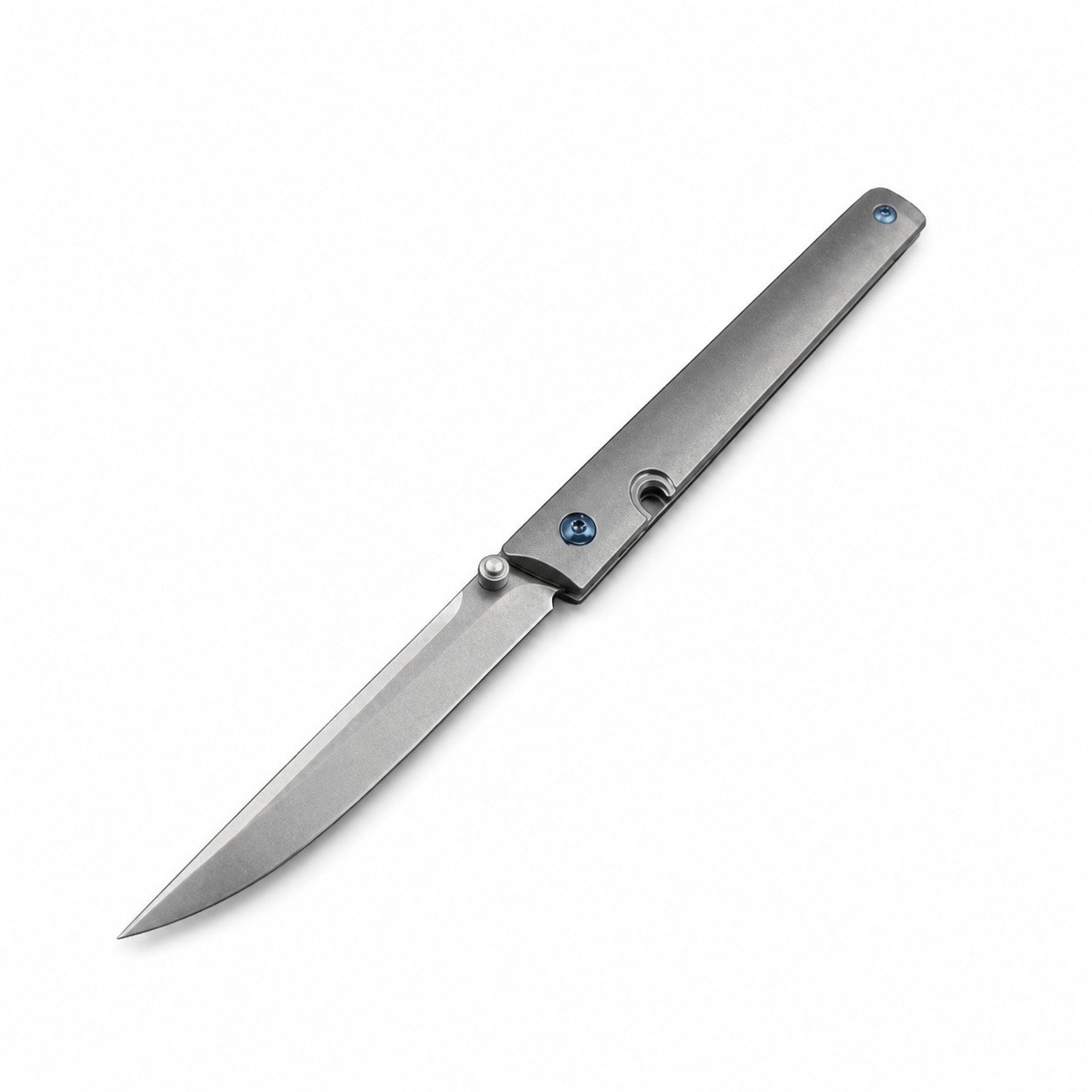
The 7096 example lists an 8.0 cm D2 blade, a titanium-alloy handle, a total length of 19.2 cm, and a net weight of 60 g. These facts help describe the product, but they do not prove that it is the sharpest option for every user.
Maintaining a Sharp Edge
Keep the edge clean and dry, avoid forcing it through unsuitable materials, and use an appropriate sharpening method with careful, even passes. Inspect the edge regularly instead of waiting until cutting becomes difficult. Store the knife closed when its design allows, and keep it away from children.
Responsible selection also means checking local rules and your own carry needs. Sharpness is only one part of a practical everyday tool; control, condition, and safe storage matter just as much.
Is the sharpest pocket knife always the best choice?
No. The best choice depends on the intended cutting tasks, carry comfort, maintenance needs, and safe handling. A very sharp edge may be less useful if the knife is difficult to control or unsuitable for the material being cut.
How can I keep a pocket knife sharp?
Clean and dry the blade, use a suitable sharpening method, and make controlled passes according to the tool’s instructions. Check the edge frequently and avoid using the knife for materials or tasks outside its intended purpose.